
Description
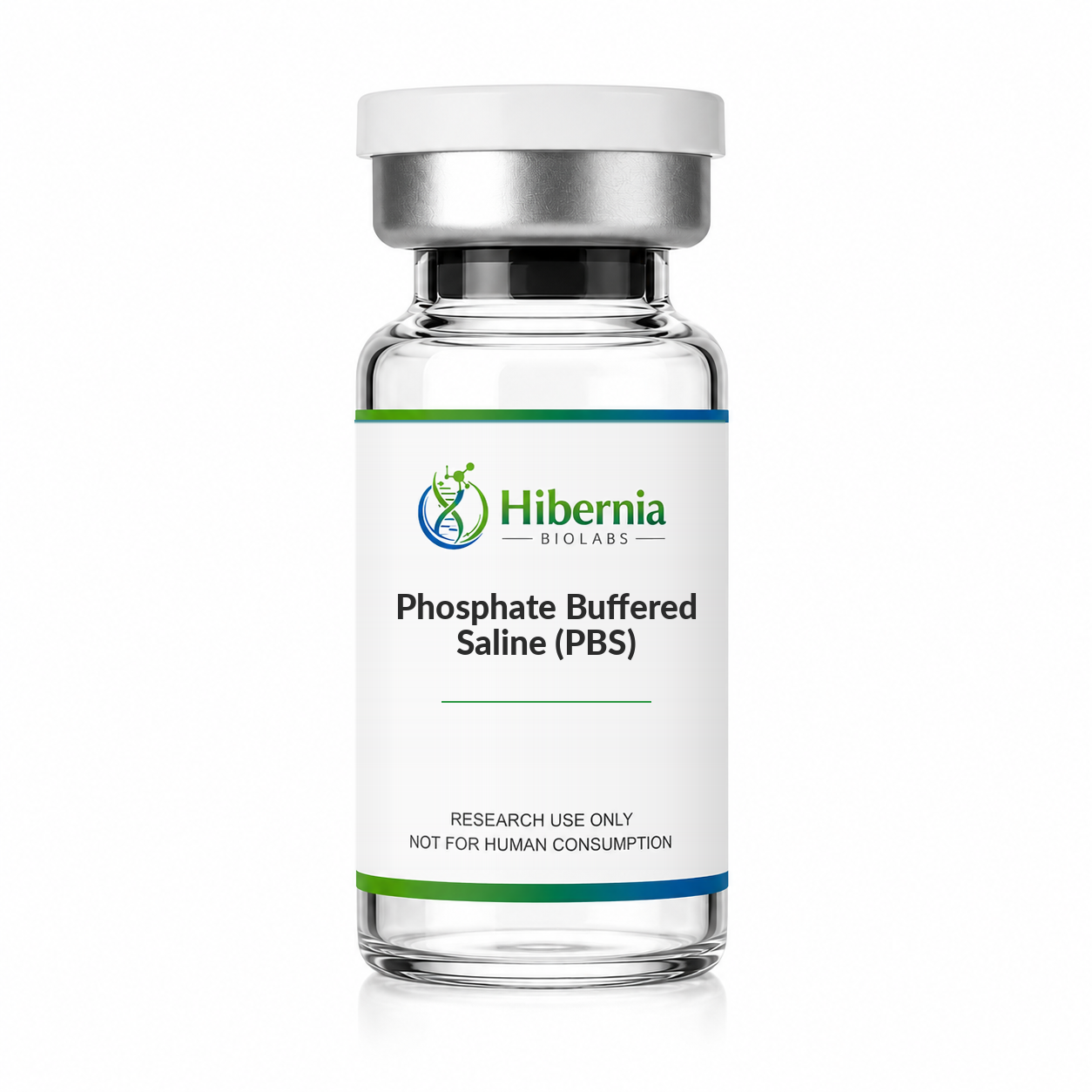
Phosphate Buffered Saline (PBS) – research-grade laboratory buffer
Phosphate Buffered Saline, commonly abbreviated as PBS, is a water-based salt solution used extensively in biological and biochemical research. Standard formulations typically contain sodium chloride, potassium chloride and phosphate salts adjusted to a near-neutral pH.
Within laboratory research contexts, PBS is used to help maintain relatively stable pH and osmotic conditions during procedures involving cells, tissues, proteins and other biological materials. Its balanced salt composition makes it relevant for washing, dilution, sample preparation and buffer-control procedures where compatibility with the experimental system has been established.
Laboratory relevance of Phosphate Buffered Saline
PBS is commonly associated with:
- Washing cells, tissues and laboratory surfaces
- Dilution of compatible biological reagents
- Preparation of samples for biochemical and cellular analysis
- Maintenance of pH and osmotic balance during laboratory procedures
- Use as a vehicle, blank or buffer control in experimental studies
Scientific and laboratory background
A commonly used 1× PBS formulation contains approximately 137 mM sodium chloride, 2.7 mM potassium chloride, 10 mM disodium phosphate and 1.8 mM monopotassium phosphate, frequently adjusted to approximately pH 7.4. However, PBS is not a single universal formulation, and products may differ in concentration, pH, ionic strength and the presence or absence of calcium, magnesium or other components.
PBS is widely used because phosphate salts provide buffering capacity while sodium and potassium salts contribute to ionic and osmotic balance. Experimental suitability depends on the formulation, concentration, pH, biological system, research material and measured endpoints. Phosphate-containing buffers may be unsuitable for certain procedures or compounds, particularly where phosphate can interfere with reactions or form precipitates with specific metal ions.
Standard PBS should not be assumed to be sterile, endotoxin-controlled, RNase-free, DNase-free or suitable for cell culture unless these properties are specifically confirmed by the product label, specification sheet or certificate of analysis. Commercial PBS products are available in multiple grades and formulations, including sterile-filtered and cell-culture-qualified preparations.
Scientific reference
St-Pierre G and Sato S. Composition of phosphate-buffered saline (PBS). Glycoscience Protocols, NCBI Bookshelf.
FOR RESEARCH USE ONLY
IMPORTANT INFORMATION
- This substance is supplied strictly for laboratory research purposes.
- It is not a peptide.
- It is not a food product.
- It is not a dietary supplement.
- It is not an authorised medicinal product.
- It is not intended for human or animal consumption.
- It is not intended for injection, infusion, oral administration, nasal administration or topical application.
- It must not be used to prepare products intended for human or animal administration.
- PBS does not inherently provide bacteriostatic or antimicrobial protection.
- The product name does not by itself confirm its concentration, composition, pH, sterility, endotoxin level or suitability for cell culture.
- Confirm whether the formulation is 1×, concentrated or supplied with additional salts before use.
- Do not use if the solution is cloudy, discoloured, contaminated or contains unexpected particles.
- Keep out of reach of children.
- Keep the container sealed when not in use.
- Use appropriate aseptic laboratory technique where required.
- Store in the original container only.
- Store according to the conditions stated on the product label or certificate of analysis.
- Protect from contamination, excessive heat and direct sunlight.
- Do not use after the stated expiry date.
In the event of accidental exposure, irritation, illness or any adverse reaction, seek medical advice.

Reviews
There are no reviews yet.