
Description
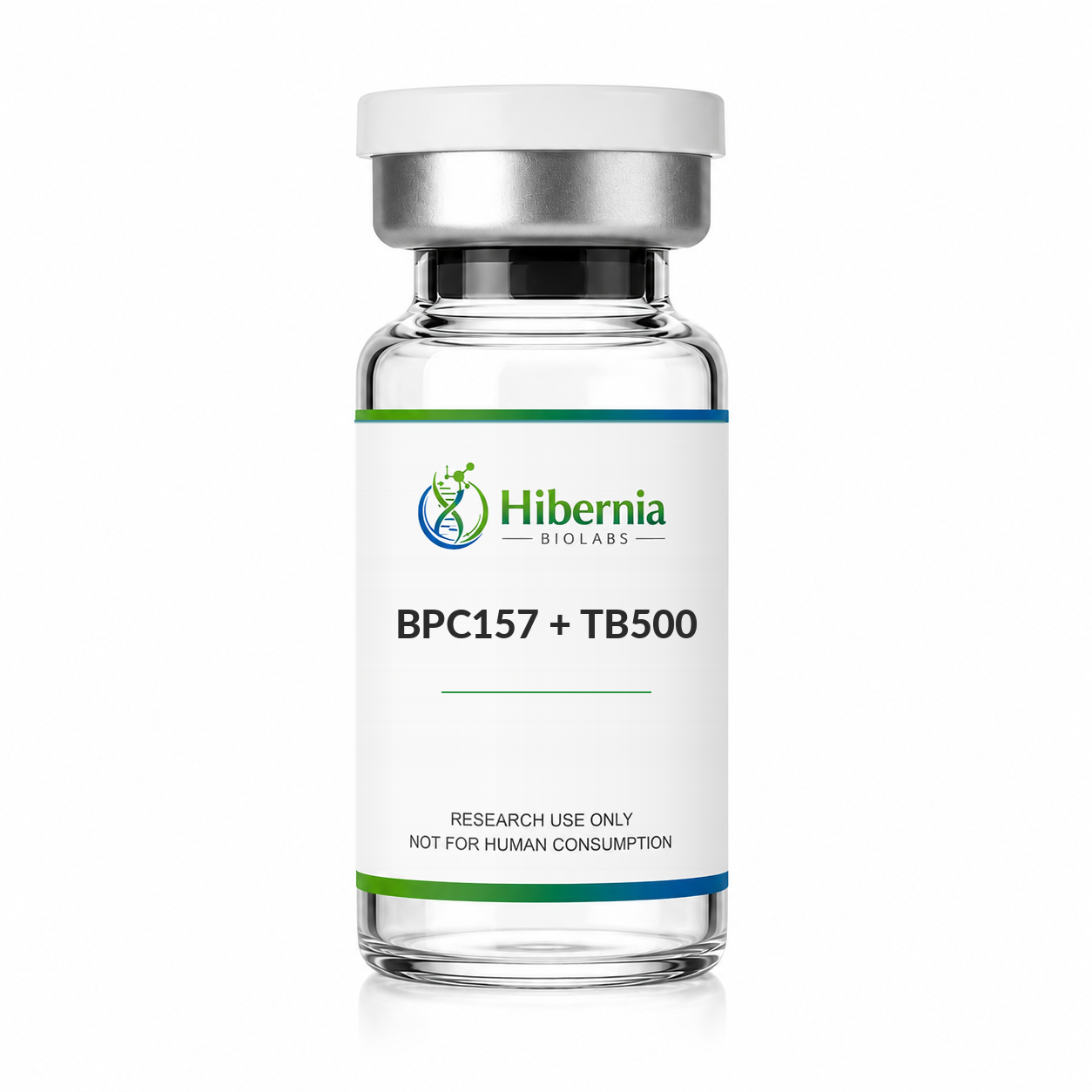
BPC-157 + TB-500 – research-grade investigational peptide blend
BPC-157 + TB-500 is a dual-peptide research blend combining BPC-157, a synthetic 15-amino-acid pentadecapeptide, with TB-500, a thymosin beta-4-related research peptide. These compounds are studied in connection with cellular migration, cytoskeletal regulation, vascular signalling and extracellular-matrix remodelling.
Within laboratory and preclinical research contexts, this combination is of interest because the two peptides are associated with different but potentially overlapping biological pathways. BPC-157 has been examined in tendon-fibroblast migration and FAK–paxillin signalling, while thymosin beta-4-related research has investigated actin regulation, endothelial-cell migration and angiogenic processes.
Research relevance of BPC-157 + TB-500
BPC-157 + TB-500 is commonly associated with:
- Investigation of tendon-fibroblast migration and cellular activity
- Studies involving actin regulation and cytoskeletal organisation
- Experimental analysis of endothelial and vascular signalling
- Research into collagen organisation and extracellular-matrix remodelling
- Comparative analysis of individual and combined peptide activity in tissue-repair models
Scientific research background
A 2026 preclinical study directly examined BPC-157, TB-500 and their combination in a rat Achilles-tendon transection and repair model. The researchers evaluated biomechanical strength, tendon architecture, collagen organisation and histopathological changes after four weeks. Some improved histopathological parameters were observed in the treatment groups; however, the combined BPC-157 and TB-500 treatment did not provide additional benefits compared with either compound alone.
The available evidence remains predominantly laboratory-based and preclinical. Results depend on the exact peptide sequence, material identity, concentration, experimental model, research conditions, methodology and measured endpoints. The designation “TB-500” may not be used consistently across suppliers, so its sequence, molecular form and purity should be confirmed through appropriate analytical documentation.
These findings should not be interpreted as confirmed therapeutic outcomes in humans. Safety information for BPC-157 remains limited, and peptide-related impurities, aggregation and immunogenicity are recognised areas of concern when research materials are insufficiently characterised.
Scientific reference
Biçer O et al. Effects of BPC-157 and TB-500 on Achilles tendon healing in rats: A histopathological and biomechanical study. Joint Diseases and Related Surgery, 2026;37(3):822–837. DOI: 10.52312/jdrs.2026.2951.
FOR RESEARCH USE ONLY
IMPORTANT INFORMATION
- This substance is supplied strictly for laboratory research purposes.
- It is not a food product.
- It is not a dietary supplement.
- It is not an authorised medicinal product.
- It is not intended for human or animal consumption.
- The product name does not by itself confirm the identity, sequence, ratio or purity of either peptide.
- Keep out of reach of children.
- Keep the container sealed when not in use.
- Store in the original container only.
- Store according to the conditions stated on the product label or certificate of analysis.
- Protect from moisture, excessive heat and direct sunlight.
- Avoid handling during pregnancy or breastfeeding.
In the event of accidental exposure, irritation, illness or any adverse reaction, seek medical advice.


Reviews
There are no reviews yet.